
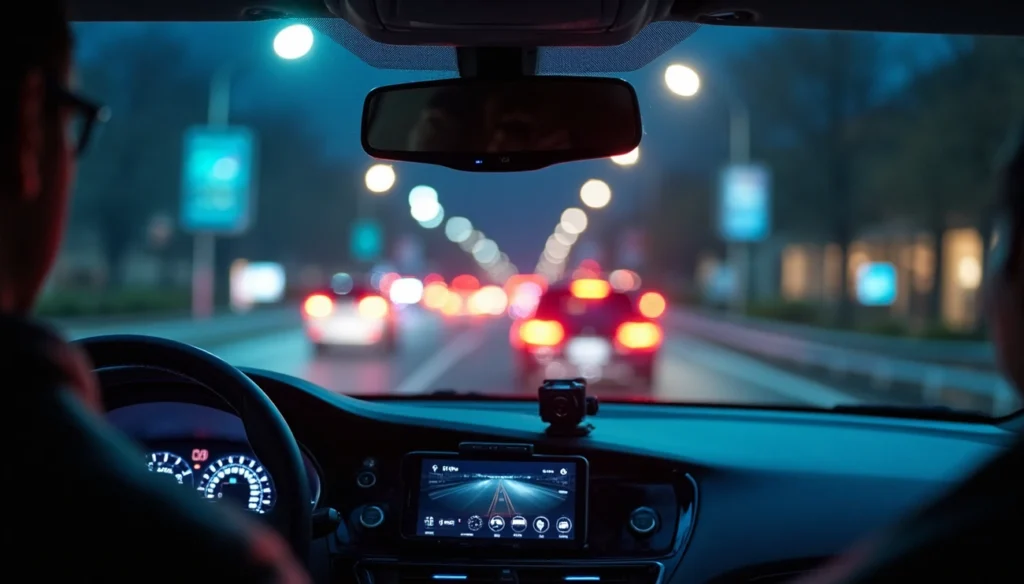
A dash cam tends to pay off for drivers who commute in traffic or park on the street, because clear video can show who caused a crash. Do not count on a premium discount for owning one. With car repair prices up 5.8% in the 12 months ended September 2026, losing a fault dispute costs more than it used to.
The same Bureau of Labor Statistics release shows motor vehicle insurance prices down 5.0% over those 12 months. So the premium side is easing while the repair side climbs. A camera matters most when a crash comes down to your word against someone else’s.
This guide covers what a dash cam can and cannot do for your insurance, when a different purchase does more, and how to set one up so the video holds up when you need it.
What does a dash cam do, and which type fits you?
A dash cam is a small camera that mounts on the windshield or dashboard and records while you drive. Most record in a loop, writing over the oldest video when the card fills. A motion sensor, often called a G-sensor, locks the clip when it detects a hard hit so it is not erased.
Power decides what the camera can catch. A plug-in camera runs off the 12-volt socket and usually stops when the engine stops. A hardwired camera connects to the fuse box and can run a parking mode while the car is off; look for a kit with a low-voltage cutoff so it does not drain your battery.
| Camera type | What it records | Good fit for | Trade-off |
|---|---|---|---|
| Front only | The road ahead | Highway and intersection crashes | Misses rear-end hits |
| Front and rear | Ahead and behind | Stop-and-go commuting, parking dings | More wiring to install |
| Front and cabin | Ahead and inside the car | Rideshare drivers | Records passengers, so consent rules matter |
| Parking mode add-on | Bumps while parked | Street or lot parking | Needs a hardwire kit or battery pack |
How can video save you money after a crash?
Fault decides whose coverage pays. The NAIC explains that liability coverage pays for injuries and property damage you cause to others when you are at fault, while collision pays for damage to your own car when it hits an object. If the other driver is found at fault, their liability coverage should pay for your car. If you are blamed, your own collision coverage pays, minus your deductible, and the claim can follow you to renewal.
Say a driver drifts into your lane and clips your front fender, then tells their insurer you drifted into them. Without a witness, your insurer may pay under your collision coverage and you pay your $1,000 deductible. With clear video of the other car crossing the line, your adjuster has a fact instead of a guess, and a much stronger case to send the bill to the other driver’s insurer.
Video does not force any insurer to rule your way. It narrows the argument. If you dropped collision coverage on an older car, the stakes are higher, because no one pays for your car if you are blamed. Our guide to how much car insurance you need covers that trade-off.
Hit-and-runs and theft
A readable plate gives police and your insurer a lead after a hit-and-run. Check how your policy handles a hit-and-run in your state before you need it, since the proof required can differ.
Theft is a different problem. NHTSA says more than 650,000 vehicles were stolen in the United States in 2025. Its list of anti-theft devices covers alarms and visible deterrents, immobilizers and recovery systems, and a dash cam is not on it. Parking mode may record a thief, but it will not keep the car from leaving.
Will a dash cam lower your insurance premium?
Usually not on its own. When the NAIC lists discounts worth asking about, it names items such as airbags and other safety equipment and anti-theft devices, not dash cams. Each insurer sets its own discounts, so ask yours directly and get any credit in writing.
Do not confuse a dash cam with an insurer’s driving-tracking program. The NAIC describes usage-based insurance as pricing that uses data from a device or a phone app on things like miles driven, time of day, hard braking and rapid acceleration, and it notes that premiums may go up or down based on how you drive. A standalone camera stores video on its card and gives your insurer no driving data unless you choose to share a clip.
In 18 years in finance and insurance performance marketing, I have seen dash cams sold with talk of insurance savings that no policy promised. Many review pages earn a commission when you click to buy, which is part of why that pitch keeps showing up.
Does footage replace a crash report?
No. A camera backs up what you report; it does not replace any report you are required to file. In California, for example, the DMV requires an SR-1 report within 10 days if anyone is injured, however minor, or killed, or if property damage is over $1,000, on top of any police or insurance report.
If your car is stolen, NHTSA says to contact police right away to file a stolen-vehicle report and to contact your insurer to file a claim within 24 hours. Other states set their own crash reporting rules, so check your state DMV. Our guide to disputing fault in a car accident claim explains how evidence fits into that process.
When does dash cam footage fail?
- The clip was overwritten. If the sensor missed a light bump, loop recording may erase it. Lock and copy the file right after any incident.
- The memory card died. Constant rewriting wears cards out, and a camera can look fine while recording nothing. Use a high-endurance card and replace it on the maker’s schedule.
- The plate is a blur. Night glare, rain and fast motion can hide plates. Test your footage after dark.
- The camera was off. Plug-in models usually stop with the engine, so a parking-lot hit may never be caught.
- The mount or audio broke a rule. States set their own rules on windshield mounts and on recording passengers’ voices. Mount it behind the mirror and turn audio off if you are unsure.
- It shows your mistakes too. Video records your speed and phone use as clearly as the other driver’s.
In a serious crash with injuries, talk with a licensed attorney in your state before you share footage with anyone other than police or your own insurer. Our guide on whether you need a lawyer after a car accident covers how to decide.
When does a camera do less than other choices?
A dash cam records a crash. Some features help prevent one. The Insurance Institute for Highway Safety reports that forward collision warning with automatic braking cuts rear-end crashes in half, while warning alone cuts them 27%. IIHS also found that blind spot detection reduces lane-change crashes by 14%.
If you are shopping for a car, those features may do more for your safety than any camera, and some insurers price them in. Our guide to car safety features and insurance discounts covers which ones to ask about.
A camera may also matter less if you barely drive and park in a garage. In that case, the money might do more in a fund toward your deductible.
How to set up a dash cam so the video holds up
- Call your insurer first. Ask whether it gives any credit for a dash cam and how it wants footage sent with a claim.
- Match the camera to your risk. Front and rear for most commuters, a cabin view for rideshare, parking mode for street parking.
- Set the date and time. A wrong timestamp gives the other side room to question the clip.
- Test it at night. Pause on a parked car’s plate after dark and see if you can read it.
- Learn the lock button. After any bump, lock the file and copy it to your phone or computer that day.
- Keep the original. Do not edit or trim the file, and do not post it online before your claim settles.
- File every required report. Then offer the video to your adjuster.
Frequently asked questions
Do dash cams lower car insurance rates?
Usually not by themselves. Each insurer sets its own discounts, and the NAIC’s list of discounts to ask about names safety equipment and anti-theft devices, not dash cams. The bigger benefit is indirect: video can keep an at-fault claim off your record.
Can dash cam footage be used in an insurance claim?
Yes. You can send it to your adjuster as evidence of who caused the crash. It does not force a decision your way, so keep the original file unedited and send a copy.
Can dash cam footage be used against me?
It can. Video shows your speed, your signals and your phone use as clearly as the other driver’s. In a serious crash, talk with a licensed attorney in your state before sharing footage beyond police and your own insurer.
Is a dash cam the same as an insurer’s driving app?
No. The NAIC says usage-based insurance prices your policy partly on driving data from a device or app, and premiums can go up or down. A standalone dash cam stores video on its card and shares nothing with your insurer unless you send a clip.
Does a dash cam help if my car is stolen?
Only a little. NHTSA’s anti-theft device groups do not include dash cams, and parking mode may record a thief without stopping one. If your car is stolen, NHTSA says to contact police right away and your insurer within 24 hours.