

Safety features that lower car insurance don’t deliver the savings most drivers expect. Car manufacturers promote innovative technology for protection, but new in-car safety and anti-theft features save drivers nowhere near 1% on their insurance premiums. This reality surprises many car owners who invest in innovative vehicle protection.
The numbers tell an interesting story. Out of nine safety technologies that experts got into, electronic stability control (ESC) stands alone in lowering car insurance rates—a tiny 0.49%, or about $7 yearly on a national average premium of $1,427. The picture changes across regions. All but one of these features fail to lower rates in 15 states. Notwithstanding that, drivers can still find ways to save money. American drivers see small benefits while Canadian motorists with anti-theft systems cut premiums by 5% to 25%. As with Canadian results, some reports show drivers using certain safety features could save up to 20% on their auto insurance premiums.
This detailed guide explores seven proven car safety features that cut insurance costs in 2025. Anti-lock braking systems and sophisticated anti-theft devices are the foundations of modern vehicle safety. You’ll learn about each technology’s function, its safety importance, and the potential insurance savings. Smart safety investments can pay off whether you plan to buy a new vehicle or upgrade your current one.
Anti-lock Braking System (ABS)

Image Source: Clearsurance
Anti-lock braking systems are the backbone of modern vehicle safety. They stop wheels from locking up when you slam on the brakes. Traditional braking needed drivers to pump the brakes manually to keep control. ABS does this job automatically, letting drivers focus on steering during emergencies.
ABS feature overview
The anti-lock braking system uses four main parts that work together to prevent skidding. Speed sensors track how fast each wheel spins and send this data to the ABS control module – the system’s brain. This module looks for signs that wheels might lock up. When it spots trouble, valves adjust the pressure in brake lines. A pump then brings back hydraulic pressure, which creates that pulsing feeling you get during emergency stops.
The system keeps wheels from locking when you hit the brakes hard. This helps tires grip the road better. It watches each wheel’s speed and spots any sudden slowdowns that might mean a wheel is about to lock. The system then quickly adjusts brake pressure – up to 15 times every second in some cases. This ensures you get the best braking power without wheels locking up.
Before ABS came along, drivers had to pump their brakes to avoid skidding. This meant splitting their attention between steering and braking at critical moments. ABS technology has come a long way since it first appeared, and it keeps getting better and more reliable.
How ABS reduces accident risk
ABS offers vital safety benefits that affect crash rates. The biggest advantage is that you can still steer while braking hard. This lets you direct your car around obstacles even when you’re pushing the brake pedal to the floor.
The safety benefits change based on conditions:
- Multiple vehicle crashes drop by 18% overall
- Fatal crashes with pedestrians and cyclists decrease by 27%
- Crashes on wet roads reported to police fall by 14%, with fatal crashes down 24%
- Rear-end collisions with stopped vehicles drop by 40% or more
ABS shows mixed results in different situations. It barely helps prevent crashes on dry roads. The system also makes run-off-road crashes 35% more likely. This creates an interesting contrast with its other safety improvements.
NHTSA research shows ABS works best at preventing skids and helping drivers keep control on wet or slippery roads. Motorcycles with ABS are 37% less likely to be in deadly crashes than those without it.
ABS and auto insurance discounts
Insurance companies reward ABS safety benefits through discount programs. Cars with ABS can get rate cuts between 5% and 15%, depending on your insurance company. These discounts come from data showing that ABS-equipped vehicles are safer to drive.
Travelers leads the pack with a 15% anti-lock brake discount. Liberty Mutual and Geico follow close behind. These savings reflect how well ABS prevents accidents, especially in tough driving conditions.
You can get the most out of these savings with a few simple steps. Check your policy details to confirm the discount. Most insurers check for ABS using your VIN, but some might need proof. Remember to mention your car’s ABS when getting insurance quotes. Some companies won’t give you the discount unless you ask.
These discounts matter even more if you have a spotty driving record. Drivers with accidents or DUIs face the biggest rate hikes, so every discount helps offset these increases. Cars with anti-lock brakes typically start with lower insurance rates because they’re less likely to crash.
Electronic Stability Control (ESC)

Image Source: BestRide
Electronic stability control ranks among the most important safety innovations in automotive history. It automatically fixes dangerous skids before drivers realize they’re losing control. The life-saving technology became mandatory equipment on all new passenger vehicles since 2012 in the United States.
ESC feature overview
Electronic stability control works as an advanced extension of anti-lock braking systems and takes vehicle safety up a notch. Companies market it under different names like Electronic Stability Program (ESP), Vehicle Dynamic Control (VDC), and Dynamic Stability Control (DSC). The technology does the same job whatever name it goes by.
ESC is a crash prevention system that helps drivers keep their vehicles stable during critical moments. The system uses advanced sensors throughout the vehicle:
- Wheel speed sensors (the same ones used by ABS)
- Steering angle sensors to detect driver intentions
- Yaw-rate sensors to measure vehicle rotation
- Lateral acceleration monitors
These parts work as one unit under an electronic control unit. The unit compares the driver’s intended direction with the vehicle’s actual movement. The system steps in automatically when it spots differences that show a possible loss of control.
How ESC improves vehicle control
ESC shines because it stops crashes before they happen. The system doesn’t just react to problems – it sees them coming. It catches the first signs of skidding or sliding when drivers take curves too fast or hit slippery roads.
The system applies brakes to specific wheels and might reduce engine power when it detects instability. To name just one example, see what happens during an oversteer – when back wheels lose grip. The system puts brake pressure on the outside front wheel to stop the spin. Most drivers never notice these small fixes happening under their feet.
ESC’s safety record speaks for itself:
- Reduces single-vehicle crashes by 35% in passenger cars and 67% in SUVs
- Decreases fatal single-vehicle crashes by 30% in cars and 63% in SUVs
- Cuts fatal rollover risk by 72-75% for cars and 75-84% for SUVs
- Saves an estimated 4,100 lives over a five-year period (2010-2014)
The system works well on any surface – from dry pavement to frozen lakes. It reacts faster than even the best drivers. ESC really proves its worth during emergency moves, wet or icy conditions, and fast cornering.
ESC impact on insurance premiums
Insurance companies see ESC as a feature that deserves lower premiums because it works so well. The technology is affordable and might pay for itself through reduced insurance rates. Yes, it is one of the few safety features that actually cuts insurance costs.
Insurance discounts come from ESC’s proven track record of stopping crashes that would lead to expensive claims. Cars with this technology usually get better base premium rates because they have fewer serious accidents.
Vehicle owners should take these steps to get the best insurance rates:
- Make sure their policy lists their ESC system
- Ask about safety technology discounts when looking for coverage
- Remember ESC works best with well-maintained tires in good shape
ESC’s money-saving benefits keep growing as more cars have this technology. About 47% of registered vehicles had ESC as standard or optional equipment in 2014. Experts expect this number to hit 95% by 2032, which means even more insurance savings.
Blind Spot Monitoring

Image Source: Best China Vehicle Safety Solutions Manufacturer
Blind spots cause about 840,000 accidents every year in the U.S., and 300 of these lead to deaths. Blind spot monitoring is a vital driver assistance technology that spots vehicles in areas you can’t see through mirrors or direct sight.
Blind spot monitoring explained
BSM systems use different detection technologies to spot vehicles coming from behind or driving in nearby lanes. These systems work with radar sensors, cameras, and smart algorithms. Sensors placed on side mirrors, rear bumper, and A-pillars keep scanning key areas that drivers can’t see.
The system warns drivers in several ways when it spots a vehicle in the blind spot:
- Visual alerts on side mirrors or A-pillars
- Warning sounds or chimes
- Vibrations in the steering wheel or seat
Most systems make these warnings stronger when drivers use their turn signal while another vehicle is in their blind spot. You’ll hear louder sounds or see brighter visual alerts, which give you extra warning before changing lanes.
Here’s how the detection works:
- Sensors turn on when you start moving
- Cameras and sensors gather data in real-time
- Software checks for vehicles and objects
- System checks how close and dangerous they are
- Warnings go off when it spots dangers
How it prevents lane-change accidents
BSM systems help prevent one of the most common types of crashes – lane-change accidents. The Insurance Institute for Highway Safety’s research shows these systems cut all lane-change crashes by 14%. Better yet, they reduce lane-change crashes with injuries by 23%.
These systems work well because they tell drivers about vehicles they can’t see otherwise. This extra awareness helps a lot when you’re:
- Getting onto highways
- Switching lanes in heavy traffic
- Dealing with fast-approaching vehicles
- Moving through parking lots with crossing traffic
BSM gives great protection to cyclists, motorcyclists, and pedestrians. Regular mirrors often miss these smaller road users, but sensor systems can spot them easily.
We could prevent about 50,000 police-reported crashes each year if every U.S. vehicle had good blind spot monitoring. The technology works well across different car brands, which shows its benefits aren’t limited to specific makers.
Does blind spot monitoring lower insurance?
BSM can help reduce your insurance premiums, though there are some limits. Insurance companies know it helps prevent crashes and makes them less severe. Many of them give discounts for cars that have this feature.
You can get the most from your insurance benefits by:
- Asking about BSM discounts
- Finding out if your VIN automatically qualifies you
- Looking at BSM with other safety features for bigger savings
The financial benefits aren’t simple though. BSM reduces accidents and claims. But it also makes cars cost more to buy and fix. These opposite effects mean your insurance rates might change differently depending on your provider and policy.
Insurance companies keep studying BSM as more cars get it. The global blind spot detection system market should grow to USD 11.49 billion by 2035. Insurance benefits might get better as more cars have this technology.
Lane Departure Warning System

Image Source: IIHS
Lane departures cause serious crashes on American roads. These accidents happen when drivers drift out of their lanes, leading to single-vehicle crashes, sideswipes, and head-on collisions. New vehicles now come with technology that helps prevent these accidents. This tech saves lives and helps lower insurance costs.
What is lane departure warning?
Lane departure warning (LDW) systems watch your car’s position in its lane. These systems let you know if your car starts drifting across lane markers without meaning to. A forward-facing camera near the rearview mirror spots lane markers on the road. The camera keeps scanning for clear paint stripes on both sides of your car.
LDW systems work through these steps:
- Camera sensors detect lane markings
- System tracks where your car is relative to these markings
- System checks if you meant to change lanes (using turn signals)
- System warns you about unplanned lane drifts
You’ll get warnings in three ways:
- Visual alerts on your dashboard
- Beeping sounds
- Vibrations in your steering wheel or seat
The system kicks in only under certain conditions. Your speed needs to be over 35 mph, and lane markings must be visible. The system won’t bug you when you use your turn signal since it knows you’re changing lanes on purpose. This tech has really caught on – U.S. passenger vehicles with LDW jumped from 20% to 88% between 2016 and 2023.
How it boosts driver awareness
LDW systems work well at preventing crashes. Research shows they cut down single-vehicle, sideswipe, and head-on crashes by 11%. Injuries from these crashes drop by 21%. Cars with LDW are nowhere near as likely to be in fatal crashes – they’re 86% safer.
LDW systems make drivers better at:
- Staying alert about lane position
- Using turn signals more often
- Getting back in their lane faster after drifting
- Keeping steady in their lane
The tech isn’t perfect though. Drivers still need to respond to alerts, which might not happen if they’re distracted or unable to react. The system needs clear lane markings to work and doesn’t deal very well with bad weather or faded road lines. Early warning systems that alert you before you completely leave your lane work better than those that wait until you’ve already crossed the line.
Insurance savings from lane departure systems
Insurance companies know these systems prevent crashes. They offer lower rates for cars with this tech since it helps avoid expensive claims.
Your discount depends on your insurance company and where you live. LDW and lane keeping assist can cut your premiums as part of broader advanced driver assistance system (ADAS) packages. Sometimes these features get bundled with other safety tech for bigger savings.
Fleet vehicles tell a different story. LDW helps prevent highway crashes, but some commercial drivers worry about false alarms making them tired, especially in wide trucks that catch crosswinds. This means insurance benefits might change based on what you drive and where.
Here’s how to get the most insurance savings:
- Ask about specific discounts for lane departure systems
- Check if discounts apply automatically based on VIN
- See how lane departure warning works with other safety features to lower your premium
More drivers are embracing these systems. Today, 87% keep their lane departure systems turned on, up from 51% eight years ago. As more people use this improving technology, we should see fewer crashes and bigger insurance savings down the road.
Automatic Emergency Braking (AEB)

Image Source: Cronauer Law
Automatic emergency braking stands out among advanced driver assistance systems. This technology can prevent crashes without any driver input. What started as a luxury option has evolved faster into a standard safety feature in many new vehicles.
AEB system overview
Automatic emergency braking combines forward-facing cameras, radar sensors, or LiDAR to spot potential collisions with vehicles, pedestrians, or obstacles ahead. The system takes control and applies the brakes if drivers don’t respond quickly enough. Most AEB systems use a three-step approach: they detect hazards, alert the driver, and brake on their own if needed.
Two primary types exist:
- Low-speed AEB: Designed for city driving and stop-and-go traffic
- High-speed AEB: Built to reduce crashes at highway speeds
Nearly all new vehicles sold in the United States now come with AEB as standard equipment. This follows a voluntary agreement between automakers and NHTSA that started in September 2022. Starting in 2029, vehicles must include AEB systems that can avoid collisions at speeds up to 62 mph.
How AEB prevents collisions
Research really shows how well automatic emergency braking works. The Partnership for Analytics Research in Traffic Safety (PARTS) found that AEB reduces front-to-rear crashes by up to 52% in newer vehicle models (2021-2023). This is better than the 46% reduction seen in older models (2015-2017).
The technology has its limits though. Current AEB systems work best at speeds below 35 mph, and their effectiveness drops at higher speeds. AAA’s tests showed 2024 model vehicles avoided all collisions at speeds up to 35 mph. However, none could prevent crashes at 55 mph.
AEB systems with pedestrian detection showed a 9% reduction in single-vehicle frontal crashes with non-motorists. This marks the first solid proof of pedestrian AEB’s effectiveness in a large study.
AEB and insurance cost reduction
Insurance companies reward AEB’s safety benefits through premium discounts. Cars with AEB can qualify for lower rates because they showed they can prevent costly claims.
Studies from Europe, the U.S., and other regions rank AEB as one of the best collision-avoidance technologies. The Insurance Institute for Highway Safety found that AEB systems with forward collision warning cut front-to-rear crashes by 50%. They also reduced front-to-rear crashes with injuries by 56%.
Insurance savings change between providers, with some offering up to 10% off for vehicles with AEB technology. Age makes a difference too – a 30-year-old driver might pay 14% less, while a 50-year-old could save up to 30% with AEB-equipped vehicles.
These discounts reflect how well the technology performs in real-life situations. Asking about AEB-related discounts when buying a new car or insurance policy can lead to big savings over time.
Adaptive Headlights

Image Source: IIHS
Night driving causes many road deaths. About half of all fatal crashes in the U.S. happen in darkness. Adaptive headlights help solve this problem by adjusting to road conditions.
What are adaptive headlights?
These headlights change their beam direction based on your steering, speed, and how the car rotates. They light up the path where your car is heading. Traditional headlights just point straight ahead. Adaptive systems move the beams as you turn.
The system uses sensors to track:
- Your steering wheel movements
- How fast you’re going
- Your car’s rotation
- What’s happening on the road ahead
Most systems can turn the lights up to 15 degrees each way, giving you a 30-degree range. This helps you see better around curves and turns, right when you need it most.
How they improve night driving safety
Research shows these headlights work well. Drivers spot obstacles about one-third of a second faster than with regular headlights. This might seem small, but those extra moments could help you avoid a crash.
The Insurance Institute for Highway Safety found that adaptive headlights could prevent up to 142,000 crashes caused by poor visibility each year in the U.S. The numbers are even better for nighttime curve accidents – they might prevent 91% of non-fatal injuries and 88% of fatal crashes.
Modern adaptive LED systems work with other safety features to help you spot hazards earlier. You’ll see pedestrians, animals, and obstacles around corners sooner than with regular headlights.
Insurance benefits of adaptive headlights
Insurance companies like these headlights so much they offer discounts. Cars with this technology have about 10% fewer property damage liability claims compared to cars without them.
Some insurance companies give up to 5% off for cars with adaptive headlights. These discounts come from studies showing fewer property damage and injury claims across different car brands.
Remember to ask about adaptive headlight discounts when getting insurance quotes. Many providers won’t give you the discount unless you bring it up.
Anti-Theft Devices
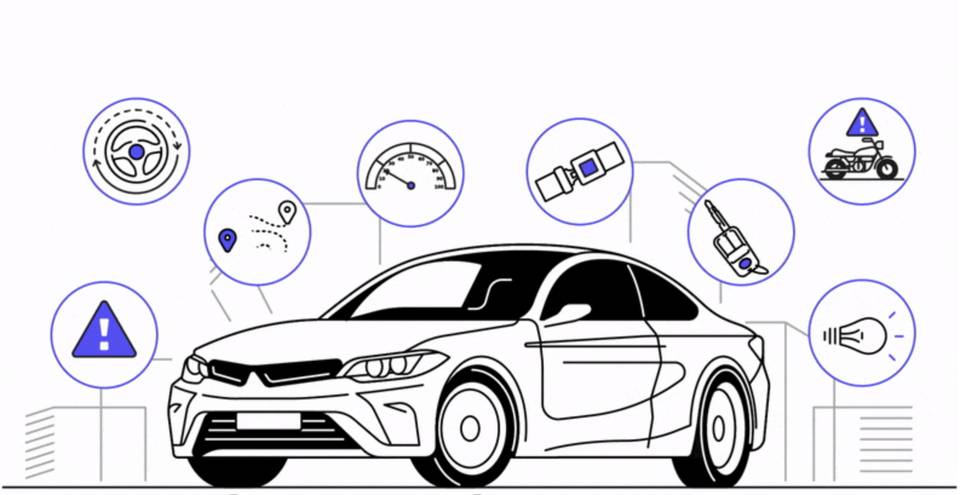
Image Source: The Zebra
Car theft worries many vehicle owners, and they often look beyond basic security features to protect their cars. Anti-theft devices protect your vehicle and can lower your insurance costs through special discounts.
Types of anti-theft devices
Today’s anti-theft technology includes many ways to protect your car:
- Mechanical devices – Steering wheel locks, brake locks, and wheel clamps stop the vehicle from moving and warn thieves to stay away
- Electronic systems – Car alarms go off when someone tries to break in, while immobilizers stop the engine from starting without proper keys
- GPS tracking systems – These give you up-to-the-minute location data and can cut insurance costs by up to 25%
- Kill switches – Hidden switches shut down key vehicle systems until you turn them back on
How they deter vehicle theft
Anti-theft devices work in several ways. Visible deterrents like steering wheel locks show thieves that your car has extra protection, making them look elsewhere. Electronic immobilizers stop hot-wiring by blocking vital starting components. These barriers make theft take longer and require more work, so thieves usually move on to easier targets.
Do anti-theft devices lower or raise insurance premiums?
Insurance companies reward you for installing anti-theft devices by lowering your premiums. Cars with built-in anti-theft systems can get up to 23% off the comprehensive part of insurance premiums. Your savings depend on your provider – Travelers gives up to 15% off for anti-theft devices, with Liberty Mutual and Geico offering similar discounts.
Insurance companies in twelve U.S. states must offer anti-theft device discounts to customers with comprehensive coverage. Most carriers apply these discounts automatically using vehicle identification numbers, but some need proof of installation.
Comparison Table
| Safety Feature | Main Goal | Benefits | Accident Reduction Rate | Insurance Discount Range |
| Anti-lock Braking System (ABS) | Stops wheels from locking when braking suddenly | Helps drivers control steering during emergency stops | 18% reduction in multiple vehicle crashes; 27% decrease in fatal pedestrian/cyclist collisions | 5-15% |
| Electronic Stability Control (ESC) | Fixes dangerous skids on its own | Keeps vehicles under control in critical moments | 35% reduction in single-vehicle crashes (cars); 67% reduction (SUVs) | Not specified, but noted as most effective for premium reduction |
| Blind Spot Monitoring | Spots vehicles you can’t see | Reduces lane-change accidents | 14% reduction in lane-change crashes; 23% reduction in crashes with injuries | Varies by provider (specific % not mentioned) |
| Lane Departure Warning | Tracks where your vehicle is in the lane | Stops accidental lane changes | 11% reduction in single-vehicle, sideswipe, and head-on crashes | Varies by provider (specific % not mentioned) |
| Automatic Emergency Braking (AEB) | Brakes by itself to avoid crashes | Stops or reduces front-end collision damage | Up to 52% reduction in front-to-rear crashes | Up to 10% |
| Adaptive Headlights | Changes light direction as you steer | Makes night driving safer on curves | Could prevent up to 142,000 visibility-related crashes annually | Up to 5% |
| Anti-Theft Devices | Blocks unauthorized access | Stops theft through different security features | Not mentioned | Up to 23% on comprehensive coverage |
Conclusion
The automotive safety technology landscape reveals surprising truths about features that affect insurance costs. Many advanced safety features save less than 1% on premiums, despite what manufacturers claim. Some features, however, offer real financial benefits while keeping people safe.
Electronic Stability Control leads the pack in reducing premiums. Anti-theft devices can cut comprehensive coverage costs by 23%. ABS systems help you save 5-15%, and Automatic Emergency Braking cuts premiums by up to 10%. Blind Spot Monitoring and Lane Departure Warning systems lower rates too, thanks to their proven ability to prevent accidents.
Location plays a big role in available discounts. Drivers should know that 15 states offer no premium cuts for safety devices at all. Canadian drivers get better deals, with anti-theft systems cutting premiums by 5-25%.
You can save more money through smart strategies. Ask about safety technology discounts when getting insurance quotes instead of assuming they’ll apply automatically. Choose vehicles with features that offer the best discount potential. Keep proof that your vehicle has these systems, especially for aftermarket installations.
Today’s savings might look small compared to what manufacturers promise. The financial benefits will grow as these systems become more sophisticated and accessible to more people. Insurance companies keep updating their calculations based on ground-level accident data. This could lead to bigger discounts as these technologies prove their worth. Beyond money, these systems offer something more valuable – better protection for you, your passengers, and others on the road.
FAQs
Q1. Which car safety features can help reduce insurance costs? Several safety features can lead to insurance discounts, including anti-lock braking systems (ABS), electronic stability control (ESC), automatic emergency braking (AEB), and adaptive headlights. Anti-theft devices can also significantly lower comprehensive coverage premiums.
Q2. How much can I save on insurance with advanced safety features? Savings vary by feature and insurer, but some examples include up to 15% for anti-lock brakes, up to 10% for automatic emergency braking, and up to 5% for adaptive headlights. Anti-theft devices can reduce comprehensive coverage by up to 23%.
Q3. Are newer cars with more safety features always cheaper to insure? Not necessarily. While advanced safety features can lead to discounts, newer cars are often more expensive to repair or replace, which can offset savings. It’s best to compare quotes for specific vehicles you’re considering.
Q4. Do all insurance companies offer discounts for safety features? Most major insurers offer some discounts for safety features, but the specific discounts and amounts vary. Some companies apply discounts automatically based on your vehicle’s VIN, while others may require you to request them explicitly.
Q5. How can I maximize my insurance savings from car safety features? To maximize savings, specifically ask about safety feature discounts when getting quotes, consider vehicles with features that offer the highest discounts, and keep documentation of any aftermarket safety installations. Also, remember that discounts can vary significantly by location and insurer.